6 things you can do this year to have more money next year

Happy New Year. With a new year comes new resolutions and new opportunities to achieve the things we didn’t last year. Aside from getting in shape, having more money is a common new year resolution for many people. But achieving this goal isn’t always easy, and it requires careful planning and consistent effort. Here are 6 things you can do this year to increase your chances of having more money next year!

Read more

5 key points from the book The Psychology of Money

The Psychology of Money: Timeless lessons on wealth, greed, and happiness by Morgan Housel is a book that explores the psychological and emotional factors that drive our relationship with money. The author, Morgan Housel, offers timeless lessons on wealth, greed, and happiness, drawing on a wide range of historical and contemporary examples to illustrate his points. Some key points from the book include:

Read more

How to Use an Envelope System to Budget and Save Money

An envelope system is a personal finance management tool that helps you keep track of your income and expenses. It’s basically a budgeting technique where you give each expense category a fixed monthly amount of money, called an “envelope,” from which to spend. Interestingly, I found out that my parents used this system early on in their marriage to manage their money. So, I figured I’d share what the envelope budget is and how you can use it to save money.

Read more

Financial silver lining of coronavirus

Photo by Sebastian Molina fotografía on Unsplash

What’s your financial silver lining in the time of the coronavirus? The COVID-19 global pandemic caused the world to quarantine and businesses to shutdown affecting billions of people around the world. People’s lives have been upended, put on pause, and completely thrown into disarray. Now, is the time to take a moment to review your finances, where you’re spending money, and how to protect yourself for the future. When it comes to money and finances, there are three possible scenarios.

  1. You’re earning less money than before
  2. You’re earning more money than before
  3. Your earning the same as before

Read more

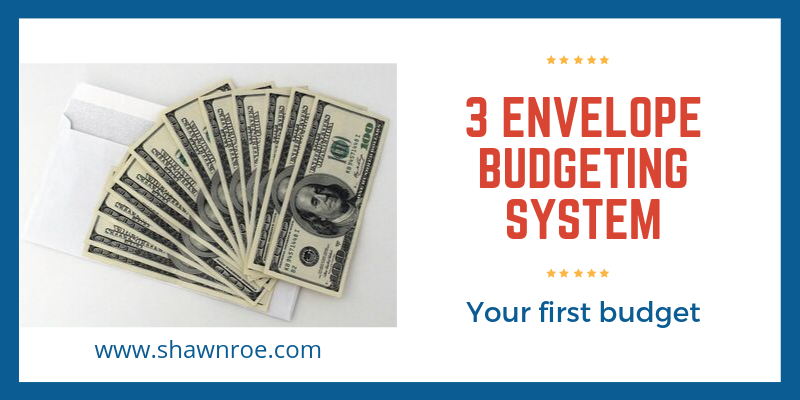
The 3 Envelope Budgeting System – Your first budget

3 envelope budgeting system

3 envelope budgeting system

The 3 envelope budgeting system is a simple way to spend less money on those troublesome categories where you tend to overspend. By using this simple money trick, you can save more cash and have enough money to pay for the things you really want. If budgeting isn’t your thing, use this simple 3 envelope budgeting system to control your spending and save more.

Other than having a job and earning money, the most critical thing you can do to improve your finances is to have (and stick to) a written budget. A budget is so fundamentally important to life that it should be taught in school. Unfortunately, how to manage money isn’t taught in school enough. So, I want to help people get started on their first budget by showing how to use the 3 envelope budgeting system. Your first budget doesn’t have to be complicated. All it takes is 3 envelopes, a pen, cash, and a little thought.

Read more

How to Build a Money Buffer to Make Your Life Stress Free

Piggy bank with coins scattered around it.

Piggy bank with coins scattered around it.Have you ever had an unexpected bill set you back and make you go deeper into debt? Those new tires set you back $400. That trip to the doc cost $800! Or that time your electric bill doubled in one month! It happens to all of us. So, what’s the best way to deal with an unexpected expense? A buffer month of money has prevented me from going into debt, and it could help you too. 

What’s a Money Buffer?

A buffer is something that protects you from bad things. It’s something that stands between you and trouble. Money is a cause for trouble in almost everybody’s life (sooner or later). A money buffer stands between you and money stress.

Having a money buffer means that you have a month’s worth of paychecks already in your bank account ready to pay for this month’s expenses. This means you’re paying for July’s bills using June’s paychecks. If that sounds backwards, it’s not. It’s forward-thinking, and if you build this buffer, your life will be so much less stressful. 

It doesn’t matter when any of your bills are taken from your account. A buffer month means the money will be there ready to pay all of them. And if your paycheck comes a day or two late because of some holiday, or some mistake by the HR department, it won’t affect you. Because this month’s paycheck is going to hang out in your account to pay for next month’s bills!

Read more

Dave Ramsey’s 4 mutual fund types explained

Image of Dave Ramsey laughing.

Image of Dave Ramsey laughing.

Dave Ramsey is a genius when it comes to inspiring people with common sense to get out of debt and to live within their means. He gets a fair bit of criticism on his investing advice though. Dave recommends people spread their investments across four types of mutual funds:

  1. Growth (25%)
  2. Growth and Income (25%)
  3. Aggressive Growth (25%)
  4. International. (25%)

Enthusiastic readers and listeners probably run off to Google to find these 4 mutual fund investments to invest like Dave and build wealth. But the answers are hidden – and followers end up having to contact an investing ELP (endorsed local providers) SmartVestor Pro that follows Dave’s rules (and pays for his endorsement).

Dave purposely shies away from giving specific investment advice to his listeners. Part of it probably has to do with the rules and regulations around giving investment advice, and part of it is probably because he’s honed his message for simplicity and maximum effect. The problem is: many debt-free followers are left wondering where to invest their retirement or extra money. I’m no ELP SmartVestor Pro, but let me help fill-in where Dave has left off when it comes to investing in mutual funds for maximum efficiency.

Read more

How many bank accounts should I have? (The answer: 5 to 8)

Most people have one or two bank accounts and wonder why their money always seems to disappear. The answer is usually that they don’t have their money organized in a way that makes saving automatic.

The fix is straightforward: more accounts, each with a specific purpose. Here’s a practical system that works.

How many bank accounts should you have?

For most people, somewhere between 5 and 8 accounts makes sense. That sounds like a lot, but each one does a specific job, and most online banks let you open multiple accounts for free with no minimums.

1. Checking account (1 account)

This is your hub. Your paycheck goes here, and your bills get paid from here. If you’re single, you need one. If you’re married, one shared checking account for household expenses makes things simpler.

Direct deposit 75% of your take-home pay here. The other 25% should go straight to savings before you ever see it.

Use this account for: rent or mortgage, utilities, groceries, gas, subscriptions, and any other regular bills.

2. Savings accounts (3 to 4 accounts)

This is where most people underestimate the power of having separate accounts. When all your savings sit in one place, you can’t tell how much is for emergencies, how much is for vacation, and how much is already spoken for. Separate accounts solve this instantly.

Emergency fund

Your first savings account is your emergency fund. Save 3 to 6 months of living expenses here and don’t touch it unless something genuinely breaks or you lose your job. For most households this means saving between $10,000 and $25,000. Start with a goal of $1,000 if you’re starting from zero, then build from there.

Car replacement fund

Your car will eventually die. That’s fine. Plan for it now so it doesn’t wreck your budget when it happens. Set a goal of at least $5,000 and add to it every month. When your car finally gives out, you buy the next one with cash instead of a car payment.

Travel and fun fund

This is the account that makes saving feel less painful. Pick something you actually want: a trip to Hawaii, a ski season, a new piece of gear. Set a monthly savings target and watch it grow. Spending money you already saved feels completely different from putting something on a credit card.

Home down payment (optional)

If you’re planning to buy a home, open a separate account for the down payment. Aim for 20% of your target home price so you can avoid private mortgage insurance (PMI), which adds meaningless cost to your monthly payment.

3. Retirement accounts (1 to 2 accounts)

Retirement accounts aren’t traditional “bank accounts,” but they’re essential parts of a complete money system.

401(k) through your employer

If your employer offers a 401(k) match, contribute at least enough to get the full match. That’s free money. Aim to eventually max it out. Invest in low-cost index funds, not actively managed funds with high fees.

Roth IRA

After you’re getting your full 401(k) match, open a Roth IRA and contribute to it every year. Roth accounts let your money grow tax-free, which is a massive advantage over decades. Open one at Vanguard, Fidelity, or Schwab and put it in a total market index fund.

Which banks should you use?

For checking and savings, online banks are the clear choice. They pay higher interest rates and charge fewer fees than traditional banks. Good options include Marcus by Goldman Sachs, Ally Bank, and SoFi. Capital One 360 is also solid and user-friendly.

For retirement accounts, Fidelity and Vanguard are the top picks. Both offer excellent low-cost index funds and no account fees.

The complete system at a glance

  • Main checking: 75% of take-home pay, pay all bills from here
  • Emergency fund: Goal 3 to 6 months of expenses ($15,000 to $25,000 for most people)
  • Car replacement fund: Goal $5,000 or more
  • Travel and fun fund: Goal $2,000 or more
  • Home down payment: Goal 20% of target home price (if applicable)
  • 401(k): At minimum contribute enough to get your employer match, aim to max it out
  • Roth IRA: Max it out each year

Why this works

When your savings is split across accounts with clear labels, two things happen. First, you stop accidentally spending money that was meant for something else. Second, saving becomes something to look forward to because each account has a specific goal attached to it.

Set up automatic transfers on payday so money moves into each account before you have a chance to spend it. That one habit does more for your finances than any budgeting app or spreadsheet.


What to know before you start DIY investing

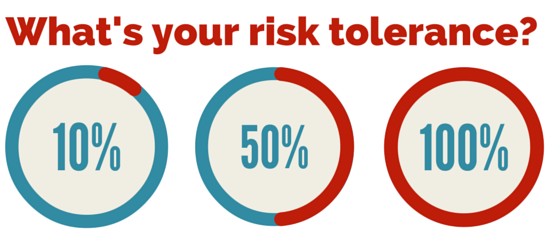
Image asking what's your risk tolerance.

Image of title that say DIY Investing - what to know before you start

Do-it-yourself or DIY investing has never been easier. If you have access to the internet and aren’t afraid of technology, then you’ve got a chance to earn money on your savings like the 1% (buzz word for the super wealthy). In this multi-part series I’m going to show you how to invest in stocks, bonds, and index funds the easy way so that you can get your money earning more money. Here’s what you need to know before you start DIY investing.

1. Get debt free (except your mortgage)

First of all, you need to be out of debt except for a possible mortgage on your house. If you have any debt (credit card, personal loans, student loans), you need to take the money you’ve saved and pay that off first. It’s a guaranteed return on your money. What does that mean? If your credit card interest rate is 14.99%, whatever you pay off on that card, you’re essentially earning 14.99% back by not having to pay that interest. Debt is negative interest on your money. Paying it off is a guaranteed return. Even a 4% guaranteed return is better than trying to cover that debt by earning more in the market. Pay off your debts first.

Read more